


Summary
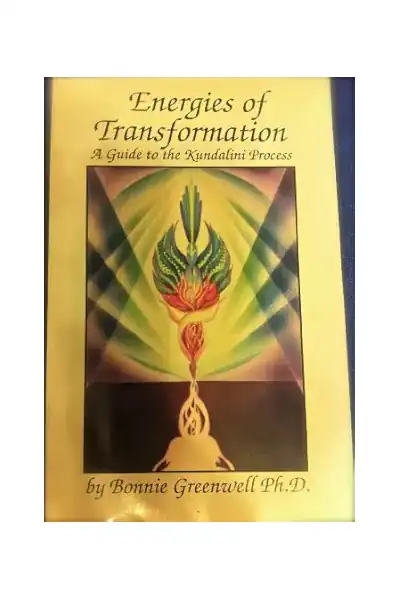
In "Energies of Transformation," Bonnie Greenwell—a transpersonal psychologist who has spent decades studying and clinically supporting people through kundalini awakenings—provides what may be the most thorough, grounded, and clinically useful guide to the kundalini process available in English. Based on her doctoral research at the Institute of Transpersonal Psychology and enriched by years of subsequent clinical work, the book approaches kundalini not as an exotic curiosity or a New Age enthusiasm but as a genuine psychophysiological phenomenon that affects real people, produces real symptoms, and requires real understanding from the clinicians and communities tasked with supporting them.
What makes this book particularly valuable for IMHU's community is Greenwell's capacity to hold the tension between the Yogic tradition's understanding of kundalini as a sacred transformative energy and the Western clinical need for frameworks that can guide practical intervention. She doesn't reduce kundalini to a neurological event, nor does she treat it as a purely spiritual phenomenon beyond clinical understanding. Instead, she maps the territory from both directions simultaneously—honoring the depth and significance of the experience while providing the kind of detailed, symptom-specific, practically oriented guidance that clinicians and experiencers actually need. In a field where most writing on kundalini is either too esoteric for clinical application or too reductive to capture the experience's true nature, Greenwell occupies essential middle ground.
What Kundalini Actually Looks Like
Greenwell begins by documenting what kundalini awakening actually looks like in the lives of contemporary Westerners—and the picture is far more varied and complex than popular accounts suggest. Drawing on extensive interviews and clinical case studies, she catalogs the remarkable range of physical, emotional, perceptual, and cognitive phenomena that can accompany the kundalini process: involuntary body movements and postures, sensations of heat or energy moving through the body, altered breathing patterns, visual and auditory phenomena, emotional upheavals that cycle through grief, rage, terror, and ecstasy, cognitive disruption and periods of confusion, heightened sensitivity to stimulation, and spontaneous states of bliss or unity consciousness.
The diversity of these presentations is itself clinically important. Kundalini awakening doesn't follow a single predictable script. Some people experience primarily physical symptoms. Others experience primarily emotional or perceptual changes. Some have dramatic, acute episodes that resolve within days or weeks. Others enter a process that unfolds over months or years, with periods of intensity alternating with relative calm. Some experience the process as primarily terrifying. Others experience it as primarily blissful. Most experience both. By documenting this diversity, Greenwell helps clinicians avoid the trap of expecting kundalini to look like a single, easily recognizable syndrome. Instead, she provides a framework for recognizing the kundalini process across its many presentations—a framework that can prevent misdiagnosis and ensure that people receive appropriate support rather than inappropriate medication.
Triggers and Conditions
Greenwell identifies a wide range of circumstances that can trigger kundalini awakening, and this mapping has direct clinical utility. Intensive meditation practice is the most commonly discussed trigger, but Greenwell documents many others: yoga practice, particularly pranayama and certain advanced postures; childbirth; near-death experiences; severe physical trauma or illness; psychedelic use; intense emotional experiences including grief and sexual experience; and sometimes nothing identifiable at all—the process simply begins spontaneously in people with no history of spiritual practice or interest. Understanding this range of triggers helps clinicians recognize kundalini-related presentations in contexts where they might not be expected.
Greenwell also examines the conditions that influence whether a kundalini awakening unfolds smoothly or becomes a crisis. Gradual onset in a person with a stable psychological foundation, adequate social support, and some understanding of what's happening tends to produce the most positive outcomes. Sudden onset in a person with pre-existing psychological vulnerabilities, no framework for understanding the experience, and no access to informed support tends to produce the most difficult outcomes. Between these extremes lies a wide spectrum of experiences that can be tilted toward positive resolution through appropriate intervention—or tilted toward crisis through inappropriate response. This understanding of modifiable factors gives clinicians practical leverage: even when they can't control whether a kundalini process begins, they can significantly influence its trajectory by attending to the conditions that shape its unfolding.
The Relationship Between Kundalini and Psychopathology
One of Greenwell's most important clinical contributions is her careful analysis of the relationship between kundalini processes and conventional psychiatric presentations. She acknowledges that kundalini symptoms can mimic anxiety disorders, mood disorders, psychotic disorders, and various somatic conditions—and that some people experiencing kundalini may also have co-occurring psychiatric conditions that need standard treatment. The relationship isn't simple or categorical. Kundalini processes don't immunize people against psychiatric illness, and psychiatric illness doesn't preclude genuine kundalini experience. The clinical task is to assess each person individually, attending to the full picture rather than forcing it into a single explanatory framework.
Greenwell provides practical guidelines for this differential assessment. Features that suggest a kundalini process include: energy sensations in the body, particularly along the spine; involuntary movements or postures that resemble yoga asanas; the experience as meaningful and potentially transformative, even when frightening; retention of self-awareness and the capacity to reflect on the experience; identifiable triggers in spiritual practice or other known catalysts; and a trajectory that, despite periods of difficulty, shows overall movement toward greater integration and awareness. Features that suggest a primarily psychiatric presentation include: absence of energy or somatic components; thought disorder and loss of coherent narrative; deteriorating rather than fluctuating function over time; and absence of any transpersonal or meaningful quality to the experience. These guidelines don't eliminate clinical ambiguity, but they provide a structured approach where currently none exists.
Practices for Stabilization and Integration
Greenwell devotes substantial attention to practical interventions that support people through active kundalini processes—interventions that range from simple lifestyle adjustments to specific energetic and contemplative practices. For people in acute kundalini crisis, she recommends grounding practices: physical activity, time in nature, reduction of stimulation, adequate nutrition with emphasis on heavier foods, warm baths, and gentle bodywork. She advises against continuing intensive meditation or yoga practice during acute episodes, noting that practices designed to activate kundalini can intensify a process that's already overwhelming. She emphasizes the importance of sleep and rest, acknowledging that kundalini processes often disrupt sleep and that sleep deprivation can rapidly escalate a manageable process into a crisis.
For the longer-term integration phase, Greenwell recommends a gradual return to gentle spiritual practice, ongoing psychotherapy with a transpersonally informed practitioner, creative expression as a channel for the powerful energies moving through the system, and community support from others who have navigated similar experiences. She's pragmatic about the role of medication: while she generally advocates for non-pharmacological approaches, she acknowledges that medication can be necessary and appropriate when the person is unable to sleep, unable to function, or in genuine distress that other interventions aren't alleviating. Her nuanced approach to medication—neither reflexively rejecting it nor defaulting to it—models the kind of clinical flexibility that IMHU advocates for in all work at the intersection of spiritual experience and mental health care.
A Bridge Between Traditions
Perhaps Greenwell's most lasting contribution is her role as a bridge between the Yogic tradition's understanding of kundalini and the Western clinical world's need for frameworks that meet professional standards of evidence and practice. She treats the Yogic literature on kundalini with genuine respect, drawing on its detailed maps of the energy system, its descriptions of the stages of awakening, and its understanding of the process's ultimate purpose: the expansion of consciousness and the realization of one's deepest nature. But she doesn't treat this literature as infallible or complete. She notes where Western clinical observation extends or corrects traditional accounts, and she's honest about the gaps in both traditions' understanding.
This bridge-building function is exactly what IMHU's mission requires across the full spectrum of spiritual experience. The organization works at the intersection of traditions that often don't communicate well with each other: contemplative traditions that have millennia of experiential wisdom about consciousness but limited empirical methodology, and clinical traditions that have rigorous methodology but limited frameworks for understanding non-ordinary experience. Greenwell demonstrates that these traditions can be brought into genuine dialogue—not by subordinating one to the other but by drawing on the strengths of each to address the limitations of the other. Her book is a model for the kind of integrative scholarship and practice that takes both spiritual depth and clinical rigor seriously, and it remains one of the most practically useful resources available for anyone working with people whose spiritual experiences have become clinical concerns.