


Summary
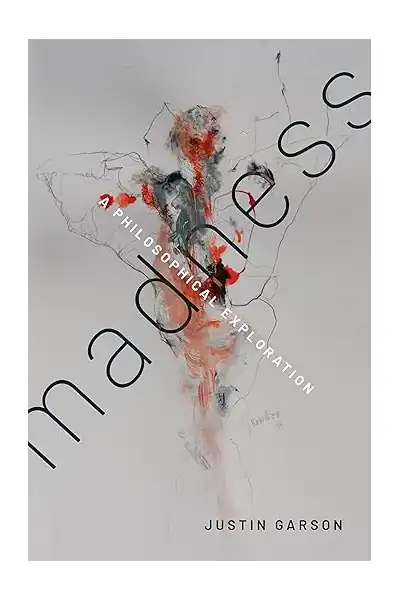
Justin Garson's "Madness: A Philosophical Exploration" asks deceptively simple questions that turn out to be extraordinarily complex: What is madness? How do we distinguish it from sanity? Who gets to decide? Published in 2022, this book brings philosophical rigor to debates that typically happen within psychiatry, challenging fundamental assumptions about mental illness, normality, and the values embedded in diagnostic categories. Garson doesn't dismiss psychiatric expertise, but he demonstrates that the questions psychiatry grapples with are fundamentally philosophical—questions about human nature, suffering, dysfunction, values, and what counts as a good or flourishing life.
What makes this book essential is Garson's refusal of easy answers. He examines the major theories of mental disorder—biomedical models, evolutionary approaches, social constructionism, harm-based frameworks—showing both their insights and limitations. Rather than declaring one correct, he reveals how each captures something important while missing crucial dimensions. This philosophical sophistication matters enormously for practice. How we define madness shapes who gets diagnosed, what treatments they receive, whether their experiences get validated or pathologized, and what possibilities remain open for understanding distress outside medical frameworks.
For IMHU's mission, this philosophical analysis is invaluable. When someone experiences voices, visions, or radical shifts in consciousness, whether we call this "spiritual emergence" or "psychotic episode" isn't just semantic—it shapes everything that follows. Garson helps us see that these aren't purely empirical questions psychiatry can settle through neuroscience. They're value-laden judgments about what counts as disorder, what kinds of unusual experiences deserve support versus suppression, and whose authority determines these distinctions. Understanding the philosophical foundations (and fault lines) of psychiatric categories creates space for alternative frameworks that IMHU needs to serve people whose experiences don't fit neatly into conventional diagnostic boxes.
The Problem of Defining Mental Disorder
Garson begins by showing that psychiatry has never successfully defined "mental disorder" in a way that's both precise and captures what clinicians and ordinary people mean by the term. The DSM (Diagnostic and Statistical Manual) acknowledges this, offering only vague criteria about "dysfunction" and "distress" without clearly specifying what makes something a disorder versus just an unusual or unwanted trait. Every proposed definition faces counterexamples: conditions that seem like disorders but don't fit the definition, or conditions that fit the definition but don't seem like disorders.
Consider some attempts: If disorder means "biological dysfunction," what about conditions with no clear biological abnormality? If it means "causing distress," what about people with mania who feel wonderful but whose behavior harms them? If it means "socially deviant," haven't we just medicalized nonconformity? If it means "harmful dysfunction," who decides what counts as harmful—and by what standards? Garson walks through these debates with clarity, showing how each approach breaks down under scrutiny.
This matters for IMHU because it reveals that psychiatric categories aren't neutral scientific facts but value-laden constructs shaped by cultural assumptions, professional interests, and contested philosophical commitments. When someone's spiritual emergence gets labeled "bipolar disorder" or "psychotic break," that's not purely objective diagnosis—it's an interpretive act embedding particular values about what counts as normal, healthy, or functional. Recognizing this doesn't mean abandoning psychiatric frameworks entirely, but it does create space for alternative interpretations grounded in different values and assumptions.
The Harm-Based Approach and Its Limits
One influential approach Garson examines is defining mental disorder as conditions that harm the person experiencing them. This seems intuitive—depression, anxiety, schizophrenia cause suffering and impair functioning, so they're disorders. But Garson shows this gets complicated quickly. Harm to whom? By what standards? Some experiences conventionally labeled disorders don't feel harmful to the person (mania, certain personality traits). Some cause harm only because society punishes or pathologizes them (homosexuality was removed from the DSM precisely because the harm came from stigma, not the condition itself).
Moreover, the harm-based approach struggles with spiritual and religious experiences that may involve suffering or dysfunction but are valued as meaningful or transformative. Is a mystic's dark night of the soul a depressive episode requiring treatment? Is a shaman's initiatory crisis a psychotic break? If these cause distress and impairment, does that make them disorders—or does their religious/spiritual meaning change their status? Garson argues we can't answer these questions through empirical investigation alone. They require value judgments about what kinds of suffering matter, whose perspective (the person's, society's, clinicians') should determine harm, and whether meaning can redeem distress.
For IMHU, this analysis validates the organization's core insight: we cannot determine whether someone experiencing intense non-ordinary states needs psychiatric treatment versus spiritual support without making philosophical and value-based judgments that go beyond clinical assessment. Recognizing this doesn't mean "anything goes" but rather that we need frameworks capable of holding both clinical and existential/spiritual perspectives without reducing one to the other.
Social Construction and the Reality of Suffering
Garson examines social constructionist critiques that argue mental disorders aren't natural kinds discovered by science but rather categories constructed through social, political, and professional processes. These critiques point to how diagnostic categories change dramatically across time and culture, how professional and economic interests shape what gets classified as disorder, and how psychiatric labels can function as tools of social control, pathologizing nonconformity or difference.
But Garson argues for a nuanced position: acknowledging that psychiatric categories are socially constructed doesn't mean the suffering they describe is unreal or that people don't genuinely need help. Social construction isn't the same as fabrication. Categories like "depression" or "schizophrenia" may be imperfect, culturally shaped, and value-laden—but they still refer to patterns of distress and dysfunction that cause real harm. The question isn't whether these conditions are "real" but rather how we should understand and respond to them.
This middle ground is crucial for IMHU's work. Critiquing psychiatric categories as culturally constructed doesn't require denying that people suffer or that some need medical intervention. What it does require is holding categories more lightly, recognizing their limitations, staying alert to how they can pathologize experiences that might be understood differently in other frameworks, and creating space for multiple valid ways of making sense of distress and dysfunction. Someone can simultaneously benefit from psychiatric treatment and find more adequate understanding of their experience through spiritual or existential frameworks.
Values, Normativity, and Contested Visions of Flourishing
Perhaps Garson's deepest insight is that judgments about mental disorder are inescapably normative—they embed contested values about what constitutes human flourishing, which capacities matter most, what trade-offs are acceptable, and whose perspective should determine these questions. We can't define disorder without some vision of health, normalcy, or proper functioning. But these visions are plural, culturally variable, and philosophically contentious.
Consider someone who hears voices. If we value social conformity and productivity, this seems clearly disordered. If we value religious experience and spiritual insight, it might represent a gift. If we value the person's own assessment, the answer depends on whether they find the voices meaningful or terrifying. None of these value frameworks is obviously "correct"—they represent different, often incompatible visions of what matters in human life. Psychiatry typically defaults to mainstream Western values (productivity, social functioning, individual autonomy, conformity to consensus reality), but these aren't universal or uncontestable.
Garson doesn't conclude that all value frameworks are equally valid or that we should abandon efforts to help people in distress. But he argues for greater humility and transparency about the values shaping psychiatric practice. When clinicians pathologize experiences, they're not just applying neutral science—they're making normative judgments that deserve scrutiny and might look different from alternative value perspectives. For IMHU, this analysis provides philosophical grounding for approaches that center the person's own values and meaning-making rather than imposing professional or cultural norms about what counts as disorder versus health.
Implications for Practice and Policy
Garson concludes that we should embrace pluralism about mental disorder—recognizing that multiple frameworks offer partial insights and that different contexts may call for different approaches. In emergency psychiatric settings dealing with acute safety crises, biomedical frameworks emphasizing rapid stabilization may be most appropriate. In therapy addressing meaning and identity, existential or narrative frameworks might serve better. In communities with different cultural understandings of unusual experiences, indigenous or religious frameworks may be most relevant. The key is matching framework to context and need rather than insisting on one-size-fits-all approaches.
This pluralism has practical implications. It suggests we need diverse treatment options and philosophical frameworks, not just medical models. It means genuinely informed consent requires explaining the value-laden assumptions behind diagnoses and treatments, not presenting them as neutral facts. It calls for humility from mental health professionals about the limits of psychiatric knowledge and the legitimacy of alternative perspectives. And it validates efforts like IMHU's to create spaces where people can make sense of unusual experiences through frameworks that may differ from mainstream psychiatry.
Garson's work ultimately demonstrates that the questions IMHU grapples with—how to distinguish pathology from spiritual emergence, whose authority determines this distinction, what values should guide responses to unusual experiences—aren't peculiar concerns of alternative communities. They're central philosophical questions that mainstream psychiatry has never adequately resolved. Recognizing this doesn't solve the practical challenges of supporting people through crisis, but it does create intellectual space for approaches that honor multiple ways of understanding madness, distress, and transformation. For IMHU's mission, this philosophical validation matters: the organization isn't rejecting science or abandoning rigor by questioning psychiatric categories and creating alternatives. It's engaging seriously with philosophical questions that psychiatry itself has failed to answer satisfactorily.