


Summary
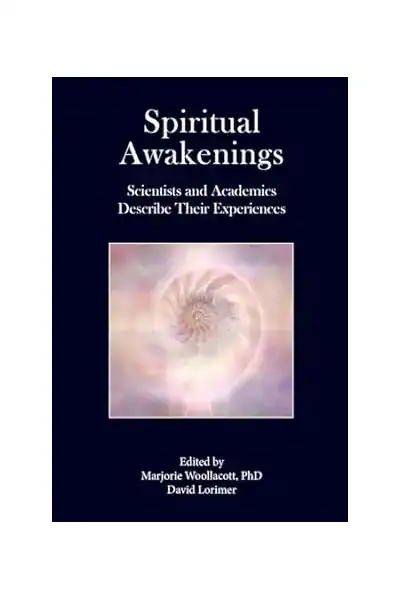
"Spiritual Awakenings: Scientists and Academics Describe Their Experiences," edited by Marjorie Woollacott and David Lorimer, presents first-person accounts from over 20 scientists, physicians, and academics describing profound spiritual experiences that transformed their understanding of reality, consciousness, and the nature of existence. Published in 2021, this collection challenges the assumption that scientific training and spiritual experience are incompatible, demonstrating instead that rigorous scientific minds often undergo profound awakenings that reshape both their personal lives and their professional work.
What makes these accounts particularly valuable is their source: these aren't credulous believers or spiritual seekers but rather skeptical, empirically-minded professionals trained to question assumptions and demand evidence. Yet they describe experiences—mystical union, encounters with transcendent realities, near-death experiences, expanded states of consciousness—that conventional scientific frameworks cannot adequately explain. Their struggles to integrate these experiences with their scientific worldviews, their attempts to research phenomena their disciplines typically dismiss, and their journeys toward expanded paradigms that can accommodate both scientific rigor and spiritual validity offer crucial insights for anyone navigating similar territory.
For IMHU's mission, this book provides powerful validation that spiritual emergence happens to highly educated, critically-minded people—not just those predisposed toward mysticism. The contributors' accounts of trying to make sense of profound experiences within and beyond scientific frameworks, their isolation when colleagues dismissed or pathologized their experiences, and their eventual integration of expanded awareness with continued scientific work model the kind of both/and thinking IMHU promotes. Understanding how scientists navigate spiritual awakening illuminates challenges anyone faces when transformative experiences don't fit conventional frameworks.
The Diversity of Awakening Experiences
The experiences described range widely: sudden mystical breakthroughs during meditation, gradual awakening through contemplative practice, near-death experiences, spontaneous shifts in consciousness during ordinary activities, psychedelic journeys, encounters with apparent non-physical entities or dimensions, and extended periods of expanded awareness. Some were sought through spiritual practice, others arrived unbidden. Some were blissful and ecstatic, others terrifying or disorienting. What unites them is their profound impact—these weren't minor shifts but fundamental transformations in how contributors understood themselves, reality, and their place in the cosmos.
Contributors describe recognizing consciousness as more fundamental than matter, experiencing profound unity or interconnection with all existence, encountering dimensions or realities beyond the physical, feeling direct knowing or gnosis that transcended intellectual understanding, and sensing presence of intelligence or awareness pervading reality. Many report that these experiences felt more real than ordinary waking consciousness, providing certainty that couldn't be shaken even when they returned to normal functioning and rational doubt.
For IMHU, this diversity demonstrates that spiritual emergence takes many forms and arrives through many paths. There's no single "correct" type of awakening experience, no one trigger or catalyst. People may experience emergence through meditation practice, spontaneously, through psychedelics, during life crises, or through other means entirely. What matters isn't the specific form but rather how the experience is understood and integrated. The scientists' accounts show that powerful awakening experiences happen across contexts and can be equally valid whether sought through practice or arriving unexpectedly.
The Crisis of Worldview
Nearly every contributor describes a crisis triggered by their awakening: how to make sense of experiences that contradicted their scientific training and materialist worldview? Scientists are taught that consciousness is produced by brain activity, that only the physical world is real, that subjective experiences are unreliable data, and that claims about non-physical realities are unscientific. Yet their direct experience contradicted all this, leaving them in profound epistemological crisis about what to believe and how to know.
Some initially tried to dismiss their experiences as aberrations, hallucinations, or brain malfunctions. But the experiences were too powerful, too real, too transformative to dismiss. Others kept silent, fearing ridicule from colleagues or damage to their careers if they spoke openly about mystical experiences or expanded consciousness. Many describe years of isolation, unable to share their most profound experiences with the scientific communities that shaped their professional identities. A few faced actual professional consequences—colleagues questioning their competence, loss of credibility, or pressure to recant claims about consciousness and reality.
Eventually, most contributors developed expanded frameworks that could hold both scientific knowledge and spiritual insight. They recognized that materialist science is powerful tool for understanding physical reality but isn't the only valid way of knowing. They distinguished between methodological naturalism (studying the natural world through scientific methods) and metaphysical materialism (claiming only matter is real). They sought out alternative scientific paradigms—quantum physics, consciousness studies, contemplative neuroscience—that create more space for non-materialist perspectives. For IMHU, these worldview struggles demonstrate why spiritual emergence often involves epistemological crisis: when your direct experience contradicts your fundamental beliefs about reality, integration requires developing new frameworks that can accommodate both.
Professional Impact and New Directions
For many contributors, awakening experiences didn't just change personal beliefs—they redirected professional work. Neuroscientists began studying meditation and contemplative practices. Physicians incorporated mind-body approaches and spiritual care into treatment. Psychologists developed transpersonal frameworks. Researchers investigated phenomena their disciplines typically ignore: near-death experiences, exceptional human experiences, meditation effects on consciousness, potential for non-local mind or consciousness beyond the brain.
This shift often required courage and willingness to risk professional standing. Studying consciousness scientifically while remaining open to non-materialist possibilities, researching meditation or mystical experience, or taking seriously phenomena like telepathy or near-death experiences can marginalize scientists within mainstream institutions. Yet many contributors felt compelled by their experiences to pursue questions their awakening raised, even at professional cost. Some founded organizations supporting integrative approaches to consciousness. Others published research challenging materialist orthodoxy. Still others mentored students interested in bridging science and spirituality.
The professional impact demonstrates that awakening doesn't require abandoning scientific rigor—it can inspire more rigorous science that asks bigger questions and employs broader methodologies. For IMHU, these accounts validate the organization's vision: people can hold both scientific sophistication and spiritual openness. Spiritual emergence doesn't mean rejecting evidence-based thinking but rather expanding what evidence we attend to and what questions we ask. The scientists who successfully integrated their awakenings show that apparent conflicts between science and spirituality often reflect narrow paradigms rather than fundamental incompatibility.
Integration Challenges and Supports
Contributors describe various challenges integrating their experiences. Some struggled with inflation or grandiosity, feeling their awakening made them special or gave them superior understanding. Others faced the opposite: how to return to ordinary life and mundane concerns when you've glimpsed cosmic unity? Many reported difficulty maintaining expanded awareness while managing daily responsibilities, relationships, and professional demands. The challenge wasn't just philosophical but practical: how to integrate transcendent insight with paying bills, raising children, meeting deadlines, navigating conflict?
Several factors supported successful integration. Ongoing spiritual practice—meditation, prayer, contemplation—helped maintain connection to expanded awareness while grounding in embodied life. Finding communities of people with similar experiences reduced isolation and provided perspective. Working with teachers or guides who understood both spiritual awakening and practical integration offered crucial support. Scholarly study of mystical traditions, consciousness research, and contemplative wisdom helped contextualize experiences within larger frameworks. And patience with the integration process, recognizing it as lifelong journey rather than single event, prevented premature conclusions or forced resolution.
For IMHU's mission, these integration strategies provide concrete guidance. People experiencing spiritual emergence need more than just understanding of what's happening—they need practical tools for living with expanded awareness, communities that can hold their experiences, teachers who bridge spiritual and scientific perspectives, and recognition that integration is ongoing work. The scientists' accounts demonstrate that successful integration combines sustained practice, intellectual framework-building, community support, and patient developmental unfolding over years or decades.
Implications for Science and Society
The editors conclude that these accounts point toward need for expanded scientific paradigms that can investigate consciousness rigorously while remaining open to non-materialist possibilities. Current scientific frameworks are unnecessarily restrictive, excluding vast domains of human experience from legitimate investigation. But science itself—properly understood as open-ended inquiry following evidence wherever it leads—can accommodate spiritual dimensions if researchers move beyond metaphysical materialism as unquestioned assumption.
This has profound implications beyond science. If consciousness is more fundamental than mainstream science acknowledges, if mystical experiences reveal genuine insights about reality, if humans can access dimensions of knowing beyond sensory perception and rational analysis, then many cultural assumptions require rethinking. Education systems need contemplative dimensions. Healthcare should address spiritual wellbeing alongside physical treatment. Psychology and psychiatry must expand beyond purely biological models. Social and political structures should support human flourishing including spiritual development, not just material prosperity.
For IMHU's vision, this collection provides powerful precedent and validation. The organization's integrative approach—honoring both scientific knowledge and spiritual insight, providing both clinical support and contemplative practice, developing frameworks that accommodate non-ordinary consciousness without romanticizing or pathologizing it—aligns with the expanded paradigms these scientists advocate. Their accounts demonstrate that what might seem fringe or anti-scientific about IMHU's mission is actually at the leading edge of consciousness research and integrative thinking. Understanding spiritual emergence requires exactly the kind of both/and sophistication these awakened scientists model: maintaining intellectual rigor while remaining open to dimensions of reality that materialist paradigms cannot capture, supporting people's transformative experiences with tools from both scientific and spiritual traditions, and building institutions that can hold complexity rather than forcing false choices between competing frameworks.