


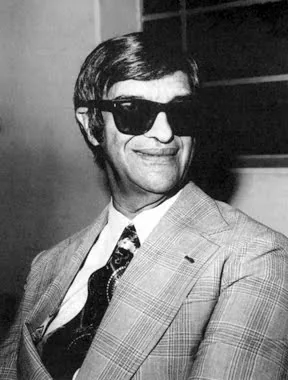
Who Is Chico Xavier
Francisco Cândido Xavier (1910–2002), universally known as Chico Xavier, was a Brazilian medium, philanthropist, and author who became one of the most influential spiritual figures in twentieth-century Brazil. Born into poverty in the mining state of Minas Gerais, Xavier began reporting mediumistic experiences in early childhood. He received minimal formal education, working as a fabric store clerk and later a low-level civil servant for most of his adult life. Despite this modest background, he produced an astonishing body of work: over 400 books attributed to deceased spirits, written through a process called psychography—automatic writing in which the medium claims to serve as a channel for a discarnate author. His works span poetry, novels, philosophy, science, history, and spiritual instruction, often attributed to named spirits including the prolific Emmanuel and André Luiz.
Xavier’s relevance to IMHU’s mission is multifaceted. First, his life and work represent the most prominent example of mediumship functioning as a sustained, productive, and socially constructive phenomenon—challenging simplistic pathological interpretations of mediumistic experiences. Second, he was a central figure in the growth of Brazilian Spiritism (based on the teachings of Allan Kardec), which integrates spiritual philosophy, mediumship, and charitable action into a coherent system that now influences millions of Brazilians, including many healthcare professionals. Third, his personal example—he donated all book royalties to charity and lived simply despite enormous fame—embodied the Spiritist principle that spiritual gifts carry moral obligations. He was voted the “Greatest Brazilian of All Time” in a 2012 national poll, reflecting his extraordinary cultural impact. (Wikipedia) While debate continues about the nature of his psychographic process, the quality, volume, and internal consistency of his output remain a significant challenge for any theory that would dismiss mediumship as mere fraud or pathology.
Core Concepts
- Psychography as a form of mediumistic communication
- Xavier’s primary practice was psychography—writing books, letters, and messages attributed to deceased spirits. He would sit with pen and paper (or later, a typewriter), enter a concentrated state, and produce text that he attributed entirely to the communicating spirit. The resulting works often displayed knowledge, literary styles, and technical details that appeared to exceed Xavier’s own education. Researchers have studied this phenomenon from both sympathetic and skeptical perspectives, and the debate remains unresolved—but the sheer scale and consistency of his output makes it one of the most documented cases of claimed mediumistic production in history.
- Spiritist philosophy as a framework for understanding consciousness and survival
- Xavier’s work is grounded in Kardecist Spiritism, which teaches that humans are immortal spirits undergoing successive incarnations for moral and intellectual development. His books—particularly those attributed to the spirits André Luiz and Emmanuel—elaborate a detailed cosmology of the afterlife, the mechanics of reincarnation, and the relationship between the spiritual and material worlds. These works have been enormously influential in shaping how millions of Brazilians understand consciousness, death, and the purpose of suffering.
- Charity and moral development as inseparable from spiritual practice
- Xavier consistently taught that mediumship and spiritual knowledge carry ethical responsibilities. He donated all proceeds from his books to charitable organizations and lived in deliberate simplicity. The Spiritist centers that grew around his work combine spiritual study and mediumship development with extensive social services—food banks, hospitals, orphanages, and educational programs. For Xavier, charity was not separate from spirituality; it was its most essential expression.
- Spiritism’s influence on Brazilian healthcare and mental health
- Xavier’s legacy extends into Brazilian healthcare culture. Spiritist psychiatric hospitals and complementary treatment centers operate throughout Brazil, offering conventional medical care alongside spiritual practices such as passes (laying on of hands), disobsession (treatment for perceived spiritual interference), and prayer. This integration of spiritual and medical approaches—controversial in many Western contexts—is a direct consequence of the cultural framework that Xavier more than anyone else helped establish.
Essential Writings
- Nosso Lar (Our Home) (attributed to the spirit André Luiz)
- The first and most famous of a series of books describing life in the spiritual world after physical death. Written as a first-person narrative by a recently deceased doctor, it presents a detailed account of the afterlife as an organized society where spirits continue to learn, serve, and develop. A foundational text of Brazilian Spiritism and a bestseller in Brazil.
- Best use: for anyone seeking to understand the Spiritist worldview and its detailed cosmology of post-mortem existence.
- Works attributed to Emmanuel (multiple volumes)
- Xavier’s extensive series attributed to the spirit Emmanuel includes historical novels, philosophical treatises, and practical spiritual guidance. These works elaborate Spiritist ethical principles and their application to daily life, and have been enormously influential in Brazilian spiritual culture.
- Best use: for readers interested in the ethical and philosophical dimensions of Spiritist thought.