


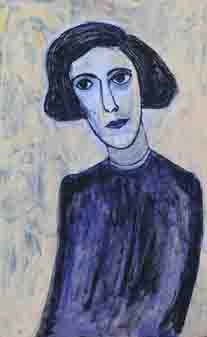
Who Is Helen Schucman
Helen Schucman (1909–1981) was an American clinical and research psychologist at Columbia University’s College of Physicians and Surgeons who became known—reluctantly and anonymously during her lifetime—as the “scribe” of A Course in Miracles (ACIM), one of the most widely studied spiritual texts to emerge from twentieth-century America. Schucman held a PhD in psychology, worked in a conventional academic medical setting, and described herself as an atheist with no interest in spirituality. Beginning in 1965, however, she reported hearing an inner voice that identified itself as Jesus and dictated a comprehensive spiritual curriculum over a period of seven years. Her colleague William Thetford helped her transcribe and organize the material, which was eventually published in 1976.
The result was a 1,200-page work consisting of a Text (laying out a non-dualistic metaphysical framework), a Workbook for Students (365 daily lessons designed to shift perception), and a Manual for Teachers. A Course in Miracles draws on Christian language but reinterprets it radically: sin is a misperception rather than a moral failing, the physical world is a projection of the separated ego, forgiveness is the central spiritual practice, and the goal is not salvation from punishment but the recognition that separation from God never actually occurred. The Course has sold over three million copies and generated a global study community, including prominent interpreters like Marianne Williamson, Kenneth Wapnick, and Gary Renard. Schucman herself remained ambivalent about the material throughout her life—she never claimed authorship, insisted the voice was not her own, and struggled to reconcile her academic identity with the experience of having produced one of the most influential spiritual texts of the modern era.
Core Concepts
- The world as a projection of the ego’s belief in separation
- The Course’s foundational metaphysical claim is that the physical world is not real in the ultimate sense—it is a projection of the mind’s belief that it has separated from God. This is not the same as saying the world doesn’t exist experientially, but that its apparent solidity and independence are illusory. The spiritual path, in this framework, is not about improving the world but about recognizing that the separation it represents never actually happened. (Wikipedia)
- Forgiveness as the central spiritual practice
- ACIM redefines forgiveness: it is not pardoning someone for a real offense, but recognizing that the offense—and the separate self who committed it—are part of the ego’s illusory framework. “True forgiveness” in the Course’s sense means seeing past the appearance of attack to the underlying call for love, and thereby releasing both yourself and the other person from the ego’s script. This practice is applied through the 365 daily Workbook lessons.
- The Holy Spirit as inner teacher
- The Course teaches that the Holy Spirit—understood not as a doctrinal entity but as the part of the mind that remembers God—is always available as an inner guide. The practice involves learning to distinguish between the ego’s voice (which speaks first and speaks loudest) and the Holy Spirit’s voice (which is quiet, patient, and consistently loving). This framework provides a practical psychology of discernment that runs throughout the entire curriculum.
- “Nothing real can be threatened”—non-dualism in Christian language
- The Course’s opening lines—“Nothing real can be threatened. Nothing unreal exists”—establish a non-dualistic metaphysics expressed in Christian vocabulary. God is the only reality; everything that appears to oppose God (sin, guilt, death, the body, the world) belongs to the realm of illusion. This positions ACIM in dialogue with Advaita Vedanta and Buddhist emptiness teachings, while remaining linguistically accessible to Western readers raised in Christian culture.
Essential Writings
- A Course in Miracles (Foundation for Inner Peace)
- The complete text: a 1,200-page spiritual curriculum consisting of a Text, a Workbook for Students (365 daily lessons), and a Manual for Teachers. The standard edition published by the Foundation for Inner Peace is the most widely used version.
- Best use: the Workbook is the entry point—do one lesson per day and let the practice accumulate. The Text is dense and best read slowly alongside the daily lessons.
- Absence from Felicity: The Story of Helen Schucman and Her Scribing of A Course in Miracles (Kenneth Wapnick)
- The most detailed biographical account of Schucman and the process by which the Course was received. Written by Wapnick, who was present during the later stages of the scribing and became the Course’s most prominent academic interpreter. It includes excerpts from Schucman’s unpublished autobiography and personal letters.
- Best use: essential context for anyone who wants to understand the human story behind the text—including Schucman’s doubts, struggles, and the interpersonal dynamics that shaped the Course’s emergence.
- A Return to Love: Reflections on the Principles of A Course in Miracles (Marianne Williamson)
- The book that brought ACIM to mainstream public attention. Williamson’s accessible, emotionally direct interpretation applies the Course’s principles to relationships, work, and daily life. It is not a substitute for the Course itself but has served as a gateway for millions of readers.
- Best use: an accessible introduction to ACIM’s core ideas—especially for readers who find the original text’s language and density challenging.
- Journey Without Distance: The Story Behind A Course in Miracles (Robert Skutch)
- An early account of how the Course came to be published, written by one of the people involved in its initial dissemination. It provides context on the Course’s origins, the relationships between Schucman, Thetford, and early supporters, and the remarkable series of events that brought the text to publication.
- Best use: a readable, narrative complement to Wapnick’s more detailed biography—good for readers who want the story without the scholarly apparatus.
Image Attribution
“Helen Schucman by Brian Whelan.jpg” by Brian Whelan, via Wikimedia Commons, licensed CC BY 3.0. Link: https://commons.wikimedia.org/wiki/File%3AHelen_Schucman_by_Brian_Whelan.jpg