


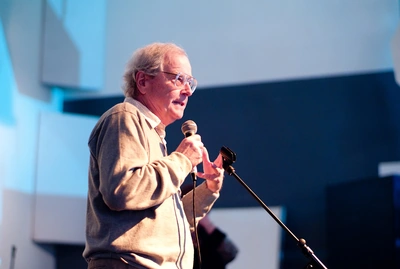
Who Is Ralph Metzner
Ralph Metzner (1936–2019) was a German-born American psychologist, psychotherapist, and writer who was one of the three central figures—alongside Timothy Leary and Richard Alpert (Ram Dass)—in the Harvard Psilocybin Project of the early 1960s, and who went on to become one of the most intellectually serious and broadly learned contributors to psychedelic research, transpersonal psychology, and ecological consciousness. Metzner earned his PhD in clinical psychology from Harvard and co-authored The Psychedelic Experience (1964) with Leary and Alpert, an adaptation of the Tibetan Book of the Dead as a guide for navigating psychedelic states.
While Leary became a countercultural icon and Alpert transformed into the spiritual teacher Ram Dass, Metzner pursued a quieter but arguably deeper path: he spent decades integrating psychedelic insights with the study of mythology, alchemy, shamanism, astrology, yoga, and ecological philosophy. He served as professor and academic dean at the California Institute of Integral Studies (CIIS) for over thirty years, where he trained generations of transpersonal therapists. His later work focused increasingly on what he called “the ecology of consciousness”—the idea that the inner transformation catalyzed by psychedelics and contemplative practice must be linked to ecological awareness and action, or it remains incomplete. Metzner was notable for his intellectual range (he published on topics from Norse mythology to Amazonian shamanism to green psychology), his commitment to integrating psychedelic experience with established wisdom traditions rather than treating it as a standalone phenomenon, and his insistence that consciousness expansion without ethical and ecological grounding is spiritually irresponsible.
Core Concepts
- Psychedelic experience as a catalyst for ecological consciousness
- Metzner’s most distinctive contribution was linking psychedelic experience to ecological awareness. He argued that entheogens can dissolve the perceptual barrier between self and nature, restoring the felt sense of interconnection with the living world—and that this restored perception carries ethical implications for how we treat the environment. He saw the ecological crisis as fundamentally a crisis of consciousness, and psychedelics as one tool (among many) for healing the split. (Wikipedia)
- Integration of psychedelic insights with wisdom traditions
- Unlike many psychedelic advocates who treated the substances as sufficient in themselves, Metzner consistently argued that psychedelic experiences must be interpreted and integrated through the frameworks of established spiritual, alchemical, and mythological traditions. He drew on alchemy, Hinduism, Buddhism, Norse mythology, and indigenous shamanism to provide containers of meaning for what can otherwise be disorienting or ungrounded experiences.
- The “unfolding self”: maps of consciousness transformation
- In The Unfolding Self, Metzner identified ten archetypal patterns of transformation found across cultures and traditions—including death-rebirth, awakening from sleep, emerging from darkness, and unifying divided selves. He treated these not as mere metaphors but as phenomenologically accurate descriptions of what consciousness actually undergoes during deep transformation, whether triggered by psychedelics, meditation, therapy, or life crisis.
- Ayahuasca as a teacher plant with ecological intelligence
- In his later career, Metzner focused extensively on ayahuasca, which he regarded as a uniquely powerful teacher plant that communicates ecological and relational wisdom. He organized some of the first academic conferences on ayahuasca, edited Sacred Vine of Spirits, and advocated for a respectful, ceremonial approach to the brew rooted in indigenous knowledge rather than Western extraction.
Essential Writings
- The Unfolding Self: Varieties of Transformative Experience
- Metzner’s most original work: a cross-cultural study of ten archetypal patterns of consciousness transformation, drawing on mythology, psychology, alchemy, and contemplative traditions. Each chapter explores a different metaphor for transformation (death-rebirth, awakening, purification by fire, etc.) with examples from multiple traditions.
- Best use: the best single book for understanding Metzner’s intellectual project—read it as a map of the territory that psychedelics, meditation, and deep therapy traverse.
- Green Psychology: Transforming Our Relationship to the Earth
- Metzner’s most focused statement on the ecology of consciousness: an argument that the environmental crisis is rooted in a dissociation between human consciousness and the natural world, and that healing this split requires both inner transformation and systemic change.
- Best use: for readers interested in the intersection of psychology, ecology, and spirituality—particularly relevant in the age of climate crisis.
- Sacred Vine of Spirits: Ayahuasca (editor)
- An anthology bringing together scientific, anthropological, and experiential perspectives on ayahuasca—one of the first serious English-language collections on the subject. Contributors include ethnobotanists, chemists, indigenous practitioners, and Western participants.
- Best use: the best introductory anthology on ayahuasca—diverse perspectives in one volume.
- The Psychedelic Experience: A Manual Based on the Tibetan Book of the Dead (with Timothy Leary and Richard Alpert)
- The classic 1964 guide that reframed the Tibetan Bardo Thödol as a map for navigating psychedelic states. Historically significant as both a cultural artifact and an early attempt to provide a structured framework for psychedelic journeys.
- Best use: a historical document and conceptual framework—read it for context rather than as a literal manual.
Image Attribution
Ralph Metzner, 9 February 2009, 13:27:12. Source: https://www.flickr.com/photos/joi/3266225085/sizes/o/in/photostream/. Author: Joi. Link: https://commons.wikimedia.org/wiki/File:Ralph_Metzner.jpg