


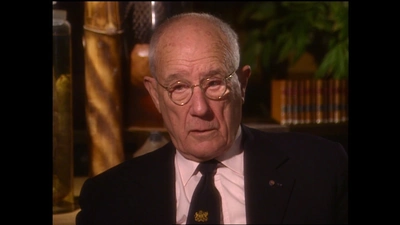
Who Is Richard Evans Schultes
Richard Evans Schultes (1915–2001) was an American biologist, botanist, and the founding figure of modern ethnobotany—the scientific study of how indigenous peoples use plants. As a professor at Harvard University for over four decades and director of Harvard's Botanical Museum, Schultes transformed ethnobotany from a marginal curiosity into a rigorous academic discipline. His fieldwork, conducted primarily in the Colombian and Amazonian rainforests during the 1940s and 1950s, documented hundreds of plant species used by Indigenous peoples for medicine, ritual, and daily life, many of which had never been catalogued by Western science.
Schultes’s significance for spirituality and consciousness studies is profound. His meticulous documentation of Indigenous uses of psychoactive plants—including ayahuasca, peyote, psilocybin mushrooms, and numerous other entheogens—provided the scientific foundation upon which the modern study of psychedelics was built. He mentored several of the next generation’s most important researchers in the field, including Wade Davis, and his work demonstrated that Indigenous plant knowledge represents not folklore or superstition but a sophisticated empirical tradition developed over millennia. Schultes advocated fiercely for the preservation of both the rainforest ecosystems and the Indigenous cultures whose knowledge they held, recognizing that the loss of either would be irreplaceable.
Core Concepts
- Indigenous plant knowledge as legitimate science
- Schultes’s central contribution was his insistence, demonstrated through decades of rigorous fieldwork, that Indigenous peoples possess deep empirical knowledge of plant pharmacology that Western science had largely ignored. He showed that indigenous classification systems for plants were sophisticated, internally consistent, and often more detailed than Western botanical categories for the same species. (Wikipedia)
- Entheogens in their cultural context
- Schultes documented the ceremonial and healing use of psychoactive plants across dozens of Indigenous cultures, always emphasizing that these substances derived their meaning and efficacy from the cultural, ritual, and ecological contexts in which they were used. He was deeply uncomfortable with the recreational drug culture of the 1960s and consistently argued that removing these plants from their sacred contexts was both scientifically irresponsible and culturally destructive.
- Biodiversity and cultural diversity as inseparable
- Long before the concept of “biocultural diversity” became common in environmental science, Schultes recognized that the destruction of rainforest ecosystems and the displacement of Indigenous peoples were two aspects of the same catastrophe. He argued that each Indigenous culture that disappears takes with it irreplaceable knowledge about the plants and ecosystems of its territory.
- Fieldwork as the foundation of real knowledge
- Schultes spent over a decade living and working in the Amazon, often under extremely difficult conditions. He modeled a style of scientific inquiry that required learning Indigenous languages, participating in ceremonies, building genuine relationships with communities, and immersing oneself in the ecosystems being studied. His example set the standard for ethical, immersive ethnobotanical fieldwork.
Essential Writings
- Plants of the Gods: Their Sacred, Healing, and Hallucinogenic Powers (with Albert Hofmann, 1979): A landmark illustrated survey of psychoactive plants used in ritual and healing worldwide, co-authored with the chemist who discovered LSD. Best use: the most comprehensive and scientifically grounded overview of entheogens in cultural context.
- The Healing Forest: Medicinal and Toxic Plants of the Northwest Amazonia (with Robert F. Raffauf, 1990): A comprehensive ethnobotanical reference documenting hundreds of medicinal plants used by Amazonian peoples. Best use: a serious scientific reference that demonstrates the depth and breadth of Indigenous pharmacological knowledge.