


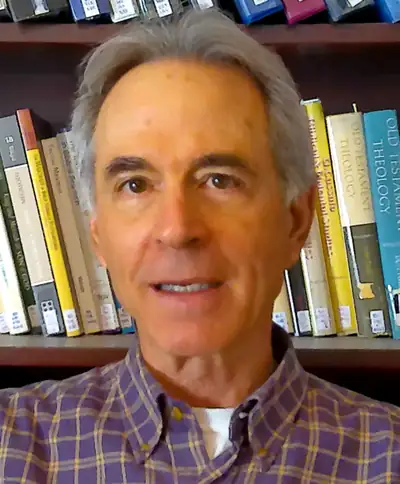
Who Is Rick Strassman
Rick Strassman (born 1952) is an American psychiatrist and clinical researcher who conducted the first federally approved and funded clinical studies of a psychedelic drug in the United States in over twenty years. Between 1990 and 1995, at the University of New Mexico, Strassman administered approximately 400 doses of DMT (N,N-dimethyltryptamine)—one of the most powerful psychedelic compounds known—to sixty human volunteers under controlled conditions. His research was groundbreaking not only for its regulatory achievement (securing DEA and FDA approval during a period of intense anti-drug policy) but for the extraordinary phenomenological data it produced: participants reported encountering autonomous entities, experiencing other dimensions of reality, undergoing ego death and rebirth, and having profoundly transformative spiritual experiences.
Strassman’s relevance to IMHU’s mission lies in his willingness to take these reports seriously as data rather than dismissing them as hallucinations or drug artifacts. His book DMT: The Spirit Molecule brought DMT research to a wide public audience and raised questions that remain central to consciousness studies: What is the relationship between endogenous neurochemistry and mystical experience? Do the entities encountered during DMT experiences have any ontological status, or are they purely products of brain activity? Can a materialist neuroscience account for the full range of DMT phenomenology? Strassman doesn’t claim to have answers, but he insists on asking the questions—and he does so with the credibility of a rigorous clinical researcher, not a speculative philosopher.
Core Concepts
- DMT as a lens on extraordinary states of consciousness: Strassman’s research demonstrated that DMT produces an extraordinarily rapid onset of intense altered states—typically within seconds of intravenous injection—featuring vivid visual phenomena, ego dissolution, encounters with seemingly autonomous entities, and experiences of other realities. The brevity (sessions last 15–20 minutes) and intensity of DMT make it uniquely valuable for studying non-ordinary states under controlled conditions. His systematic collection of phenomenological reports created one of the richest datasets on psychedelic experience in the clinical literature. (Wikipedia)
- The “spirit molecule” hypothesis: Strassman speculated that endogenous DMT—produced naturally in the human body—might play a role in naturally occurring non-ordinary states such as near-death experiences, mystical experiences, birth, and death. While this hypothesis remains unproven and controversial, it raised the provocative possibility that the brain has a built-in capacity for generating the kinds of experiences typically associated with external psychedelic administration. The idea has stimulated ongoing research into endogenous DMT production and its possible functions.
- Entity encounters as a phenomenological category: One of the most striking findings from Strassman’s research was the frequency with which participants reported encountering apparently autonomous beings—described variously as aliens, elves, guides, or presences—who seemed to exist independently of the experiencer. Strassman documented these reports without dismissing them as meaningless hallucinations or endorsing them as literal encounters with non-human intelligence. His approach modeled the kind of phenomenological neutrality that clinicians need when working with people who report extraordinary experiences.
- The limits of materialist explanation: Strassman was trained in conventional psychiatry and came to psychedelic research as a careful empiricist. But the data he collected pushed him to acknowledge that standard neurochemical models of consciousness might not be adequate to explain the full range of DMT experience. He has been candid about this intellectual discomfort, and his work raises important questions for anyone committed to both scientific rigor and openness to the full range of human experience.
- Regulatory courage and the reopening of psychedelic research: Strassman’s practical achievement—navigating the FDA, DEA, and university regulatory systems to conduct the first new human psychedelic research in the United States—helped pave the way for the current psychedelic research renaissance. His success demonstrated that psychedelic research could be done safely, ethically, and within existing regulatory frameworks, emboldening the next generation of researchers.
Essential Writings
- DMT: The Spirit Molecule (2001): Strassman’s account of his DMT research, including detailed participant reports, his own intellectual journey, and his reflections on what the data mean for our understanding of consciousness. Best use: the essential primary source—readable, honest, and thought-provoking. The book that introduced DMT research to a wide audience.
- DMT and the Soul of Prophecy (2014): Strassman’s later work exploring parallels between DMT experiences and the visionary states described in the Hebrew Bible. Best use: for readers interested in the intersection of psychedelic phenomenology and religious tradition—more speculative than the first book but intellectually ambitious.
- “Dose-Response Study of N,N-Dimethyltryptamine in Humans” (Archives of General Psychiatry, 1994): The primary research paper from Strassman’s DMT studies. Best use: the scientific foundation—essential for anyone who wants to engage with the actual clinical data rather than the popular interpretation.
Image Attribution
Photograph of Rick Strassman, 1 May 2023. Source: Received through email from Rick Strassman. Author: Rick Strassman. Link: https://commons.wikimedia.org/wiki/File:Rick_Strassman_(academic).png