


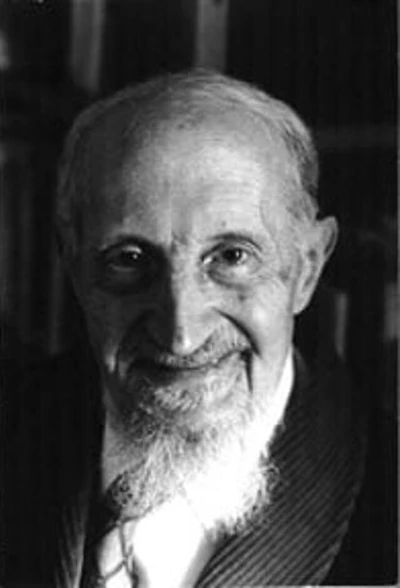
Who Is Roberto Assagioli
Roberto Assagioli (1888–1974) was an Italian psychiatrist who founded Psychosynthesis, one of the earliest psychological frameworks to explicitly integrate psychotherapy with spiritual development. Born in Venice and trained in medicine in Florence, Assagioli was one of the first Italians to practice psychoanalysis—he studied Freud’s work closely and corresponded with both Freud and Jung. But from the beginning, he found Freud’s model incomplete: it mapped the basement of the psyche (drives, repressions, the personal unconscious) while ignoring the attic (creativity, meaning, peak experiences, spiritual aspiration). His doctoral dissertation, written in 1910, already argued for a psychology that included the “higher unconscious”—the realm of intuition, inspiration, altruism, and transpersonal experience.
Assagioli spent the next six decades developing Psychosynthesis into a comprehensive therapeutic and educational model. He survived imprisonment by the Fascists during World War II (for the crime of meditation and internationalism), rebuilt his work in postwar Florence, and trained a generation of practitioners in a model that treats the human being as an evolving, purposeful whole—not merely a collection of pathologies to be resolved. Psychosynthesis includes both an “analytical” phase (exploring and integrating subpersonalities, wounds, and unconscious material) and a “synthetic” phase (aligning the personality with deeper purpose, will, and transpersonal values). This two-phase structure anticipates much of what integrative and transpersonal psychology would later develop—and it does so with a practical clarity that many later models lack.
Core Concepts
- The higher unconscious (superconscious): Assagioli’s most distinctive contribution is his insistence that the unconscious is not only a repository of repressed material but also the source of our highest capacities—creativity, intuition, inspiration, altruistic love, and spiritual insight. He called this the “higher unconscious” or “superconscious” and argued that ignoring it produces a psychology that is accurate about illness but blind to health, growth, and meaning. This concept directly anticipates Maslow’s peak experiences and Grof’s transpersonal domain. (Wikipedia)
- The egg diagram — a map of the whole psyche: Assagioli’s famous “egg diagram” maps the psyche as a spectrum: the lower unconscious (primitive drives, traumatic memories), the middle unconscious (accessible memories and skills), the field of consciousness (current awareness), the higher unconscious (transpersonal potential), and the collective unconscious (shared archetypal material). At the center is the personal self (“I”), and at the apex of the higher unconscious is the transpersonal Self—the deepest identity, aligned with purpose and meaning. This map gives clinicians a visual framework for understanding the full range of human experience.
- Subpersonalities: Assagioli observed that the personality is not a single unified entity but a collection of semi-autonomous “subpersonalities”—each with its own voice, desires, and behavioral patterns. The inner critic, the pleaser, the rebel, the perfectionist—these are all subpersonalities that developed for good reasons but can become rigid and conflicting. Psychosynthesis works with these parts through identification (getting to know each one), disidentification (recognizing that you are not any single part), and integration (allowing the personal self to coordinate the parts into a functional whole). This approach directly anticipates Richard Schwartz’s Internal Family Systems model.
- Disidentification and the personal self: A core Psychosynthesis exercise involves the practice of disidentification: “I have a body, but I am not my body. I have emotions, but I am not my emotions. I have thoughts, but I am not my thoughts.” The aim is to discover the “I”—the personal center of awareness and will—that is distinct from any particular content of experience. This is not dissociation; it’s a conscious shift in the center of gravity from content to awareness. It has obvious parallels to mindfulness practice and to Ramana Maharshi’s self-inquiry.
- The will as a psychological function: Assagioli gave the will a central role in psychological health—not as brute willpower or repression but as the capacity to choose, direct, and align one’s energies with one’s deepest values. He distinguished between strong will (the ability to act), skillful will (the ability to act effectively and with minimum friction), good will (the ability to act in service of the whole), and transpersonal will (alignment with a purpose larger than the personal ego). This nuanced understanding of will is a corrective to both the passive models of therapy (“just accept everything”) and the aggressive models (“just push harder”).
Essential Writings
- Psychosynthesis: A Collection of Basic Writings (1965): Assagioli’s primary statement of his model, covering the egg diagram, subpersonalities, the will, disidentification, and the relationship between personal and transpersonal development. Best use: the foundational text—start here for the core framework.
- The Act of Will (1973): A detailed exploration of the will as a psychological function, covering its stages, qualities, and role in therapy and personal development. Best use: for anyone who wants to understand Assagioli’s distinctive contribution to the psychology of agency, motivation, and purpose.
- Transpersonal Development: The Dimension Beyond Psychosynthesis (1988, posthumous): A collection of writings on the transpersonal dimensions of Psychosynthesis—spiritual awakening, the superconscious, and the relationship between psychological growth and spiritual realization. Best use: the essential text for understanding how Psychosynthesis handles the spiritual dimensions of human development.