


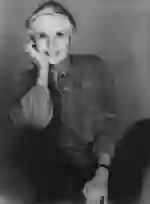
Who Is Winifred Lucas
Winifred Blake Lucas (1911–2006) was a clinical psychologist whose career spanned nearly seven decades and traced an arc from mainstream psychoanalysis through humanistic and transpersonal psychology to the emerging field of regression therapy. She grew up in the Puget Sound area of Washington State, earned her B.A. from the University of Washington, traveled to Europe in the 1930s to study Sanskrit, and later earned her Ph.D. from UCLA in 1949—one of the first women to receive a doctorate from that institution. She held diplomate status from the American Board of Professional Psychology and maintained a private practice and research program for over forty-five years, serving on the core faculty of the California School of Professional Psychology (now Alliant University). (Amarantos)
What makes Lucas significant is not that she invented regression therapy but that she organized it. By the time she began her major editorial work in the 1980s, regression techniques—including past-life regression, prenatal and perinatal work, and interlife exploration—were being practiced by clinicians worldwide, but without any systematic professional literature. Lucas spent over a decade compiling Regression Therapy: A Handbook for Professionals, a two-volume compendium that gathered case histories, theoretical frameworks, and clinical protocols from more than twenty leading practitioners. The result was the first (and still the most comprehensive) attempt to give regression therapy the kind of professional infrastructure that other therapeutic modalities take for granted. She was a co-founder of the International Association for Regression Research and Therapies (formerly APRT) and founded the Institute of Regression Therapy Training program in Sedona, Arizona. Her intellectual journey—from psychoanalysis through Rogerian therapy, transpersonal psychology, Assagioli’s psychosynthesis, and Transcendental Meditation—reflected a genuine openness to wherever the clinical evidence led. She was also notably ahead of her time in her compassionate approach to LGBT psychology, at a period when most clinicians treated homosexuality as pathological. (International Journal of Regression Therapy)
Core Concepts
- Regression therapy as a legitimate clinical discipline
- Lucas’s central contribution was professionalization. She insisted that regression work—whether it involves childhood memories, birth experiences, or past-life material—should be held to the same standards of documentation, training, and ethical accountability as any other therapeutic modality. Her handbook didn’t just collect case studies; it addressed contraindications, failures, theoretical controversies, and the limits of the field’s own evidence base. (JRT Book Review)
- Agnosticism about ontology, focus on therapeutic outcome
- Lucas maintained a pragmatic clinical stance: whether past-life memories are "real" in a literal reincarnation sense or are symbolic constructions of the psyche, what matters therapeutically is whether engaging with the material produces lasting relief from symptoms. This allowed clinicians from very different metaphysical backgrounds to use regression techniques without being forced into a specific belief system. My take: this is the right clinical posture—and it mirrors the pragmatism of William James.
- The breadth of altered-state therapeutic work
- Her second volume expanded the scope beyond past-life regression to include prenatal and perinatal experiences, childhood trauma, interlife exploration, dialogue with the unborn soul, entity releasement, and work with the dying and the dead. By mapping this territory in a single professional reference, she demonstrated that regression therapy was not a single technique but a family of approaches united by the clinical use of non-ordinary states of consciousness. (Google Books)
- Integration across therapeutic traditions
- Lucas’s own clinical evolution—from Freudian psychoanalysis through Rogerian therapy, psychosynthesis, transpersonal psychology, and meditation practice—gave her an unusual ability to see connections across modalities that other practitioners treated as rivals. Her handbook reflects this integrative instinct: contributors include psychoanalytically trained therapists, hypnotherapists, transpersonal practitioners, and body-oriented clinicians, all presented in dialogue rather than competition.
Essential Writings
- Regression Therapy: A Handbook for Professionals (2-Volume Set)
- The definitive professional reference for the field. Volume One covers past-life therapy: theory, technique, case studies from thirteen leading practitioners, and Lucas’s own comprehensive ten-chapter overview of the field’s history, assumptions, controversies, and methods. Volume Two covers prenatal, perinatal, childhood, interlife, entity releasement, death/dying, and future-life work. More than a decade in the making and widely regarded as the single most important contribution to the regression therapy literature.
- Best use: essential reading for any clinician who works with (or encounters) regression material in therapy—not as a how-to manual for beginners, but as a professional-grade reference that takes both the potential and the limitations of the work seriously.