


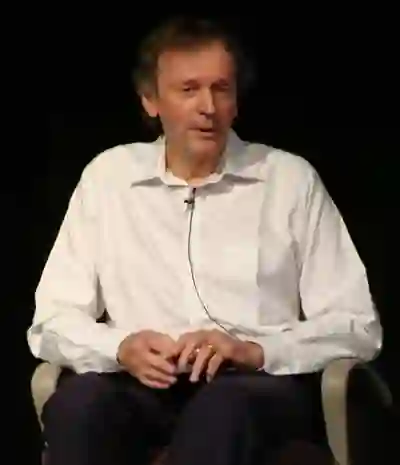
Who Is Rupert Sheldrake
Rupert Sheldrake (born 1942) is a British biologist, author, and researcher best known for his hypothesis of morphic resonance—a controversial but increasingly discussed theory proposing that nature operates through collective memory rather than through fixed laws, and that organisms inherit a kind of cumulative memory from previous members of their species through what he calls “morphic fields.” He was educated at Cambridge (where he studied natural sciences and earned a Ph.D. in biochemistry), was a Fellow of Clare College, Cambridge, and spent years conducting plant physiology research in India at the International Crops Research Institute for the Semi-Arid Tropics (ICRISAT) in Hyderabad. His scientific pedigree is impeccable; what made him a pariah in some circles was his willingness to follow his own data and intuitions into territory that mainstream biology considers off-limits. (Wikipedia)
Sheldrake’s relevance to IMHU’s mission lies in his systematic challenge to the metaphysical assumptions underlying modern science—what he calls “the science delusion” (the title of his 2012 book, published as The Science Delusion in the UK and Science Set Free in the US). He argues that science has become imprisoned by a set of unexamined dogmas—that nature is mechanical, that matter is unconscious, that the laws of nature are fixed, that consciousness is nothing but brain activity—and that these assumptions are holding back inquiry rather than advancing it. His morphic resonance hypothesis, first published in A New Science of Life (1981), was famously called “the best candidate for burning there has been for many years” by the editor of Nature—a reaction that tells you as much about the boundaries of acceptable discourse in science as it does about the hypothesis itself. Sheldrake continues to conduct research, write, and speak publicly, and his work has influenced fields ranging from biology and consciousness studies to education and spiritual practice. (sheldrake.org)
Core Concepts
- Morphic resonance and morphic fields
- Sheldrake’s central hypothesis is that all self-organizing systems—from molecules and crystals to organisms and societies—are shaped by “morphic fields” that carry a kind of collective memory. These fields are not physical in the conventional sense; they operate across time and space, influencing how systems develop by transmitting the cumulative habits of previous similar systems. This means, for example, that if rats learn a new trick in one laboratory, rats in a completely separate laboratory should learn it faster—not because of genetic transmission but because of morphic resonance. Sheldrake has conducted experiments testing this prediction, and while mainstream biology has largely ignored or dismissed the results, the hypothesis remains coherent and testable.
- The ten dogmas of modern science
- In The Science Delusion, Sheldrake identifies ten core assumptions that he argues function as unexamined dogmas in mainstream science: that nature is mechanical, that matter is unconscious, that the laws of nature are fixed, that the total amount of matter and energy is constant, that nature is purposeless, that biological inheritance is entirely material, that memories are stored in the brain, that the mind is confined to the brain, that psychic phenomena are illusory, and that mechanistic medicine is the only kind that works. He devotes a chapter to each, examining the evidence for and against, and argues that turning each dogma into a question opens up new lines of inquiry.
- The extended mind
- Sheldrake has proposed that the mind is not confined to the brain but extends beyond it through morphic fields—an idea that has implications for understanding telepathy, the sense of being stared at, and other phenomena that mainstream psychology dismisses as impossible. His experimental research on the sense of being stared at has produced statistically significant results in controlled conditions, and he has argued that these findings are consistent with the hypothesis that intention and attention can operate at a distance through field effects.
- Science as a practice, not just a set of beliefs
- A recurring theme in Sheldrake’s work is that real science is a method of inquiry—not a fixed worldview. He distinguishes between the scientific method (hypothesis, experiment, evidence) and the ideology of scientism (the belief that materialist science has already answered all fundamental questions). His critique is not anti-science but pro-inquiry: he wants science to be more scientific by questioning its own assumptions.
Essential Writings
- The Science Delusion: Freeing the Spirit of Enquiry (2012)
- Sheldrake’s most accessible and comprehensive critique of scientific materialism. Each chapter takes one of the ten dogmas and examines it rigorously, drawing on evidence from physics, biology, psychology, and consciousness research. The book’s central argument—that science advances by questioning assumptions, not by defending them—is relevant to every field IMHU engages.
- Best use: the essential starting point for anyone interested in Sheldrake’s thinking—and the best single-volume case for why the metaphysical assumptions of mainstream science need to be re-examined.
- A New Science of Life: The Hypothesis of Morphic Resonance (1981, revised 2009)
- The book that started it all—Sheldrake’s original presentation of the morphic resonance hypothesis. More technical than The Science Delusion, it lays out the theoretical framework in detail and proposes specific experiments for testing it. The revised edition includes updates on subsequent research.
- Best use: for readers who want to engage with the hypothesis at a deeper level—the foundational scientific text.
- The Presence of the Past: Morphic Resonance and the Memory of Nature (1988, revised 2011)
- A broader exploration of morphic resonance that extends the hypothesis from biology to physics, chemistry, psychology, and culture. Sheldrake argues that all of nature has a kind of memory, and that the so-called “laws” of nature may be better understood as evolving habits.
- Best use: the philosophical and cosmological implications of morphic resonance—where Sheldrake’s thinking intersects with process philosophy, systems theory, and consciousness studies.
- Ways to Go Beyond and Why They Work: Seven Spiritual Practices in a Scientific Age (2019)
- Sheldrake’s most explicitly spiritual book, examining seven practices—including meditation, gratitude, connecting with nature, and pilgrimage—through the lens of both scientific research and personal experience. It represents his attempt to bridge the gap between science and spirituality not just theoretically but practically.
- Best use: for readers interested in how Sheldrake applies his scientific thinking to spiritual practice—the practical complement to his theoretical work.